Muscular Strains and Tears: A Common Snowsports Injury We Treat at Peak Sports Physio Hakuba
If you’ve spent any time skiing or snowboarding in Hakuba, chances are you’ve either felt it yourself or heard someone say it in the lift line - “I think I pulled something.”
Muscular strains and tears are a common injury we see at Peak Sports Physio Hakuba, especially during peak winter when people are skiing hard, riding longer days, or pushing into new terrain. The good news? Most muscle injuries recover really well with the right treatment and timing.
Let’s break down what they are, how they happen on snow, and how we help you get back to riding.
What Is a Muscle Strain or Tear?
A muscle strain happens when muscle fibres are stretched beyond their normal limits. A muscle tear is a more severe version where some (or all) of the fibres actually tear.
In snowsports, muscles are constantly working to:
Absorb impact
Control speed and edges
Stabilise joints on uneven or icy terrain
When demand exceeds capacity — boom — injury.
Grades of Muscle Strains and Tears
We generally classify muscle injuries into three grades:
Grade 1 (Mild Strain)
Small amount of muscle fibre damage
Mild pain or tightness
Little to no strength loss
Often still able to ski or ride (though not comfortably)
Typical recovery:
1–2 weeks
Grade 2 (Moderate Strain / Partial Tear)
Larger number of fibres torn
Clear pain, swelling, and weakness
Pain with movement and loading
Skiing or snowboarding usually not possible initially
Typical recovery:
3–6 weeks
Grade 3 (Severe Tear / Rupture)
Complete muscle tear
Sudden sharp pain, often with a “pop” sensation
Significant weakness or loss of function
Sometimes visible bruising or a muscle “gap”
Typical recovery:
8–12+ weeks (sometimes longer and may require medical imaging or specialist referral)
Common Muscles Injured in Skiing & Snowboarding
At Peak Sports Physio Hakuba, we commonly treat strains and tears in:
Quads – aggressive skiing, hard landings, moguls
Hamstrings – sudden deceleration, catching an edge
Calves – boot fatigue, icy conditions, long days
Groin / Adductors – wide stances, variable terrain
Glutes – big mountain days, touring, fatigue-related injuries
Common Mechanisms of Injury on Snow
Muscle injuries don’t usually happen from one single thing — it’s often a mix of factors:
Sudden edge catch or slip
Landing backseat or off-balance
Fatigue late in the day
Cold muscles early in the morning
Overuse from multiple big days in a row
Pushing harder than your current conditioning
Hakuba powder days are amazing… but they’re demanding
Common Symptoms to Watch For
Sharp or aching pain in a muscle
Tightness or cramping
Pain with stretching or contraction
Swelling or bruising
Weakness or instability
Pain that worsens the next day
If pain is increasing or lingering more than a few days, it’s worth getting checked.
How We Treat Muscle Strains & Tears at Peak Sports Physio Hakuba
Our goal is simple: get you back on snow safely, confidently, and as soon as possible — without re-injuring yourself.
Initial Assessment
We’ll assess:
Injury severity and grade
Which muscle fibres are involved
How it affects your skiing or riding mechanics
Whether imaging or referral is needed
Early-Stage Treatment
Depending on the injury, this may include:
Pain and swelling management
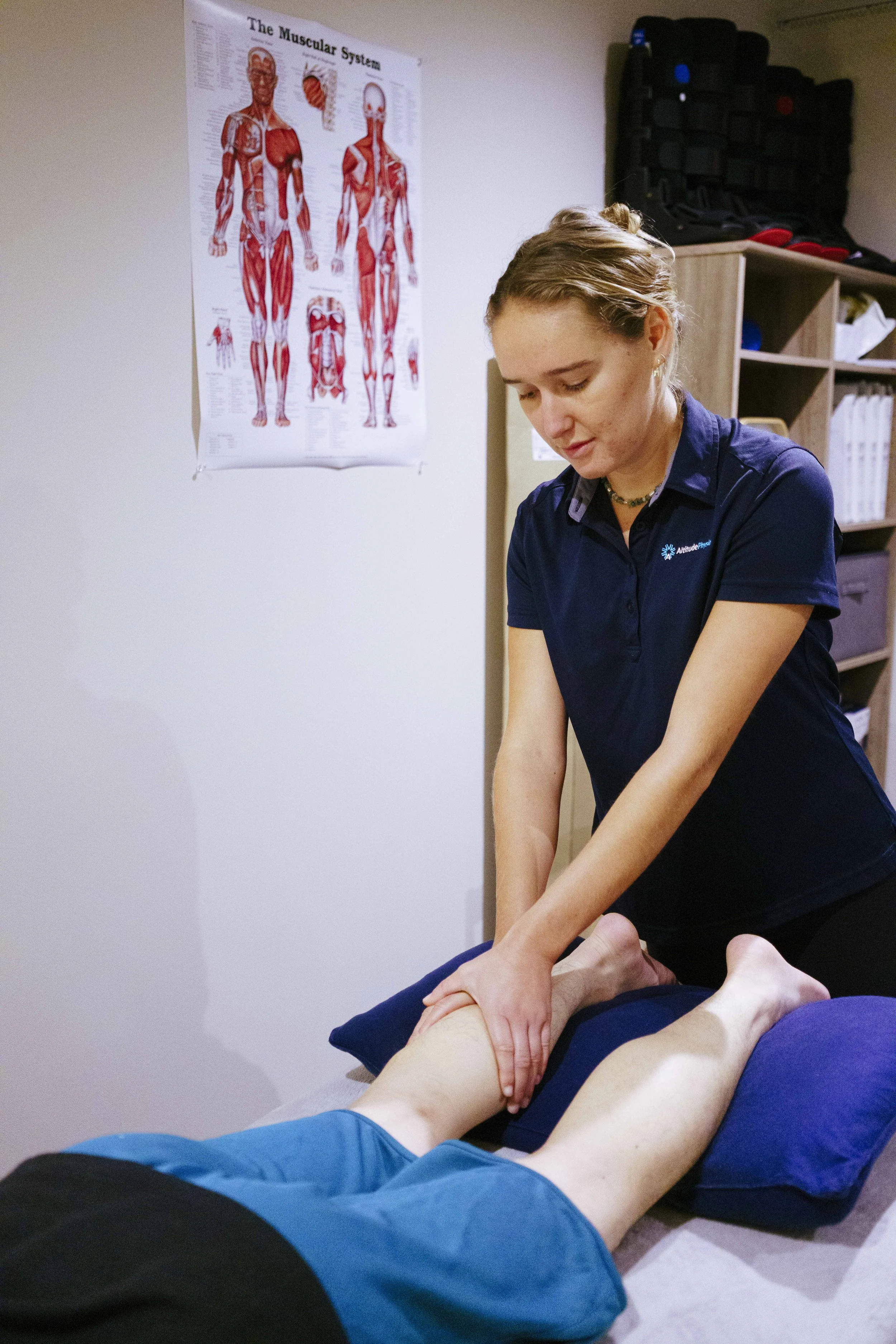
Manual therapy to reduce muscle tension
Gentle activation exercises
Advice on whether to rest, modify, or keep riding
We don’t default to “total rest” unless it’s actually needed.
Rehab & Strength Progression
As healing progresses, we focus on:
Restoring full range of motion
Strengthening the injured muscle
Improving load tolerance
Ski- and snowboard-specific movements
Fatigue resistance (big one for Hakuba!)
Return-to-Snow Planning
We’ll guide you on:
When to ski or ride again
How to pace your first days back
Terrain and conditions to avoid early
How to reduce re-injury risk
Final Thoughts
Muscle strains and tears are part of snowsports — especially when you’re riding hard in epic terrain like Hakuba. The key is early assessment, smart rehab, and progressive loading.
At Peak Sports Physio Hakuba, we understand skiing, snowboarding, and the realities of a winter season. Whether you’re here for a week or the whole winter, we’ll help keep you moving and riding strong.
See you on the mountain — and in the clinic if needed
