Neck Pain After Skiing or Snowboarding in Hakuba?
At Peak Sports Physio Hakuba, we treat injuries to every region of the body—whether you’ve taken a hard fall on the mountain or simply feel stiff after the 6-hour bus ride from Tokyo.
Below are the most common neck injuries we see in skiers and snowboarders in Hakuba, plus how physiotherapy can help you recover fast and get back on the slopes.
1. Whiplash from Skiing & Snowboarding
How Whiplash Happens in Snow Sports
Nothing says “I’m learning to snowboard” like a classic whiplash from catching a heelside edge.
Skiers experience this less often, but it still happens—especially with unexpected backward falls.
Even though helmets are essential for safety, the added weight can increase the acceleration forces on the neck during impact.
Common Symptoms of Whiplash
Pain turning the head
Difficulty sitting straight up in bed
Feeling like your neck can’t support your head
Headaches or muscle tightness
Whiplash Treatment at Peak Sports Physio Hakuba
Recovery focuses on restoring deep neck stabiliser function. Your physiotherapist may use:
Neck retraining exercises
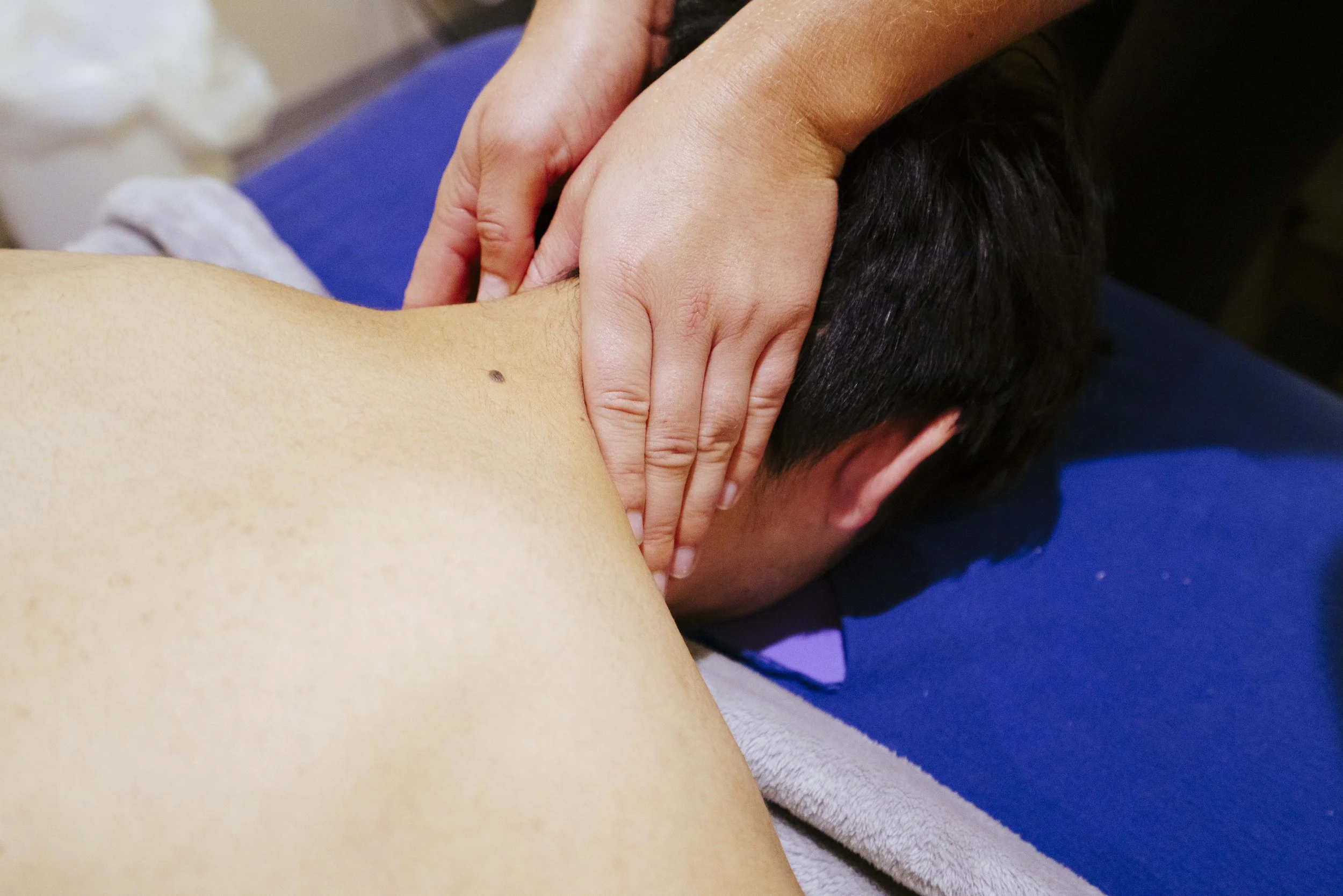
Physiotherapy massage
Joint mobilisation/manipulation
Heat packs and K-taping for short-term relief
2. Acute Wry Neck (Sudden Neck Locking)
What Causes Acute Wry Neck?
If you’ve woken up unable to turn your head, you may have an acute wry neck.
In Hakuba, we often see this after:
Sleeping on hard Japanese “sandbag” pillows
Long flights or overnight travel
Poor posture during transit
It’s painful—but responds quickly to the right treatment.
Treatment for Acute Wry Neck
Our physiotherapists commonly use:
Targeted massage and manipulation
Neck mobility and stretching programs
Acupuncture / dry needling
Heat therapy
Taping for support
Bonus: Peak Sports Physio Hakuba stocks western-style pillows, which can help prevent a repeat episode and improve your sleep while visiting Japan.
3. Cervicogenic Headaches (Neck-Related Headaches)
Why Skiers & Snowboarders Get Headaches in Hakuba
Cervicogenic headaches arise from tight or irritated neck muscles.
In Hakuba, the risk increases because of:
Long travel days
Poor pillow support in accommodations
Hours of skiing/snowboarding
Dehydration (especially after enjoying local beers, sake, or whisky)
Rehydrating with water or electrolyte drinks can significantly reduce symptoms.
Cervicogenic Headache Treatment
This condition responds well to:
Physiotherapy massage
Spinal mobilisation
Neck mobility exercises
Dry needling
Heat therapy
Supportive taping
4. Cervical Radiculopathy (Nerve Pain from the Neck)
What It Feels Like
Cervical radiculopathy involves neck pain plus nerve symptoms, such as:
Arm pain
Pins and needles
Numbness
Reduced arm strength
Do You Need Imaging?
Imaging may be recommended if the injury followed a traumatic fall.
However, most cases improve with conservative, non-surgical physiotherapy treatment.
How We Treat Cervical Radiculopathy
Treatment commonly includes:
Manual therapy and mobilisation
Cervical and thoracic mobility exercises
Neural gliding exercises
Dry needling
Heat therapy and taping
Referral for medical review if medication may help
Our physiotherapists are internationally trained and experienced in managing these conditions safely.
5. Concussion in Skiing & Snowboarding
How Concussions Occur on the Mountain
Concussions can occur after hitting the snow, trees, park features or other riders.
Although better recognised in contact sports, concussions in recreational snow sports remain under-treated.
What You Must Avoid After a Concussion
Until symptoms settle, avoid:
Skiing and snowboarding
Strenuous physical activity
Alcohol
Onsens (hot springs)
These all increase blood pressure, which can worsen or delay concussion recovery.
Concussion Management at Peak Sports Physio Hakuba
A medical professional should assess whether imaging is required.
From there, we guide your safe and gradual return to activity.
Important:
You should avoid flying within 7–10 days of a concussion unless cleared by a doctor.
Conclusion: Need Physiotherapy in Hakuba? We Can Help
From whiplash and nerve pain to headaches and concussion, Peak Sports Physio Hakuba treats a wide range of neck and head injuries common to skiing and snowboarding.
If you’ve hurt yourself on the mountain—or simply feel stiff after hours of travel—our experienced physiotherapists can help you recover quickly and safely so you can enjoy your time in the Japanese Alps.
