Common Shoulder Injuries We Treat in Hakuba
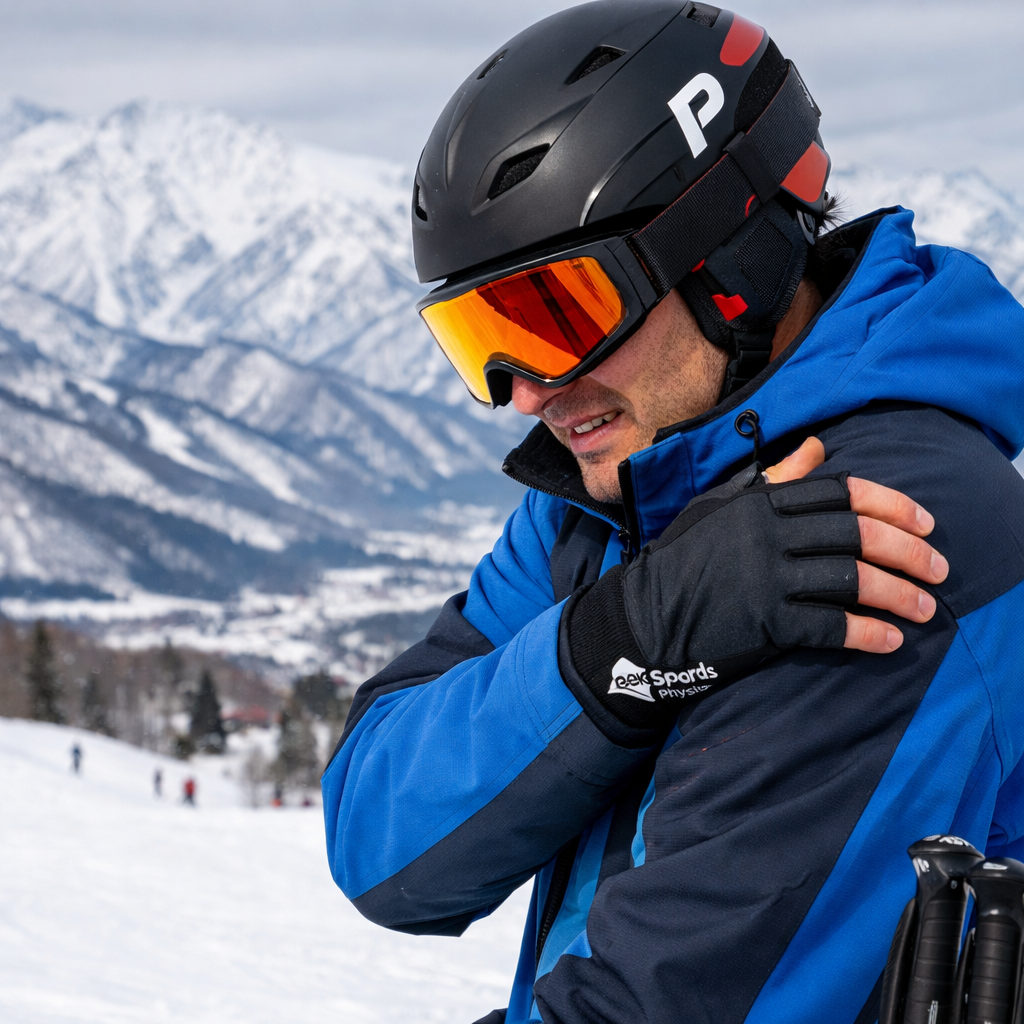
Shoulder injuries are common during the ski and snowboard season in Hakuba. High-speed falls, collisions, awkward landings, and repeated loading through the arms can all place significant stress on the shoulder.
Expert Shoulder Physiotherapy at Peak Sports Physio Hakuba
The shoulder is one of the most mobile joints in the body, which is great for movement — but it also means it can be vulnerable when forces exceed its ability to stabilise.
At Peak Sports Physio Hakuba, we regularly assess and treat shoulder injuries related to skiing, snowboarding, and mountain sports. Whether your injury happened from a single fall or developed gradually over the season, our experienced sports physiotherapists are here to help you recover and get back on the slopes safely.
Below are some of the most common shoulder injuries we treat in Hakuba, and how physiotherapy can help.
Clavicle (Collarbone) Fractures
How clavicle fractures happen in snow sports
Clavicle fractures usually occur following:
A direct fall onto the shoulder
Falling onto an outstretched arm
High-speed crashes or collisions
Snowboarders are particularly prone due to forward falls, while skiers often sustain collarbone fractures during collisions or awkward landings.
Common symptoms
Immediate pain over the collarbone
Swelling or visible deformity
Difficulty lifting or moving the arm
Pain with deep breathing or rolling in bed
Physiotherapy management at Peak Sports Physio Hakuba
Many clavicle fractures are managed non-surgically, often with an initial period in a sling.
Our physio team focuses on:
Education around healing timelines and what to expect
Pain and inflammation management
Exercises to maintain and restore shoulder and elbow movement
Gradual strengthening to support return to skiing or snowboarding
We work closely with local doctors and orthopaedic specialists when imaging or surgical opinions are required.
Glenohumeral (Shoulder) Joint Dislocations
How shoulder dislocations occur
The glenohumeral joint is the most commonly dislocated joint in the body. In snow sports, dislocations often happen due to:
Falls onto an outstretched arm
Sudden twisting forces during a crash
High-impact collisions
Anterior (front) shoulder dislocations are by far the most common in skiing and snowboarding.
Common symptoms
Sudden, severe shoulder pain
Visible deformity or “out of place” appearance
Inability to move the arm
Possible numbness or tingling down the arm
Physiotherapy treatment at Peak Sports Physio Hakuba
Short period of immobilisation in a sling, with referral for imaging if indicated
Cold therapy and compression to reduce pain and swelling
Manual therapy to restore movement and reduce pain
Taping and support strategies
Your rehabilitation program will focus on:
Strengthening the rotator cuff and shoulder stabilisers
Improving control and proprioception to reduce re-injury risk
When appropriate, we stock shoulder braces designed for this injury to support a safe and confident return to skiing or snowboarding.
Labral Injuries
How labral injuries happen
The labrum is a ring of cartilage that helps stabilise the shoulder joint. Labral injuries often occur with:
Shoulder dislocations
Repeated falls or heavy impacts
Forceful traction through the arm
Common symptoms
Deep shoulder pain or aching
Clicking, catching, or locking sensations
Feelings of instability
Pain with overhead or pushing movements
Physiotherapy management
Manual therapy, including dry needling when appropriate
Pain reduction and restoration of shoulder movement
Rehabilitation focuses on:
Improving shoulder stability
Strengthening the rotator cuff and scapular muscles
Gradual return to sport-specific movements
Persistent or severe symptoms may require imaging or surgical consultation.
Acromioclavicular (AC) Joint Injuries
How AC joint injuries occur
AC joint injuries commonly happen after:
A direct fall onto the point of the shoulder
Catching an edge while snowboarding
Heavy landings from jumps
These injuries range from mild ligament sprains to complete joint separations.
Common symptoms
Localised pain on the top of the shoulder
Swelling or a visible “bump” at the AC joint
Pain lifting the arm or lying on the affected side
Pain with cross-body movements
Physiotherapy treatment at Peak Sports Physio Hakuba
Most AC joint injuries are treated without surgery.
Treatment may include:
Ice, compression, and swelling management
Manual therapy to restore comfortable movement
Taping or bracing for support
Progressive exercises to:
Restore shoulder mobility
Strengthen surrounding muscles
Gradually return to snow sports
Higher-grade injuries may be referred for specialist review.
Rotator Cuff–Related Shoulder Pain
How rotator cuff pain develops in Hakuba
Rotator cuff pain often develops due to:
Repeated falls and heavy loading through the arm
Shoulder fatigue or poor movement control
Previous shoulder injuries affecting biomechanics
In snow sports, this is more commonly an overuse or load-related condition, rather than a sudden traumatic tear.
Common symptoms
Pain lifting the arm or reaching overhead
Pain when lying on the affected shoulder
Weakness or reduced endurance
Gradual onset rather than a single injury event
Physiotherapy treatment
Manual therapy for pain relief and improved movement
Targeted strengthening of the rotator cuff and scapular muscles
Improving shoulder mechanics and efficiency
Education on load modification and pain management
Clear guidance on safe return-to-sport loading
Why Choose Peak Sports Physio Hakuba for Shoulder Injuries?
Extensive experience treating ski and snowboard shoulder injuries
On-site assessment during the Hakuba snow season
Individualised rehabilitation programs
Access to imaging referrals, braces, and local medical networks
A practical, sport-specific approach to getting you back on the mountain
📍 Located in the heart of Hakuba, Peak Sports Physio Hakuba helps you recover faster, move better, and enjoy more time on the slopes.
